


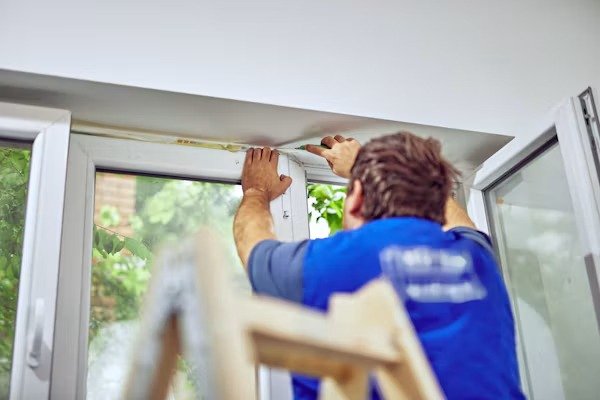
Get up close to a properly sealed joint, and there is not much to say about it. Its width is uniform, its surface is smooth, and its edges are clean. This apparently easy-to-accomplish result demands much thought and planning before applying the sealant material. It is the job of a true professional who makes his art hidden from plain view in this preparatory process.
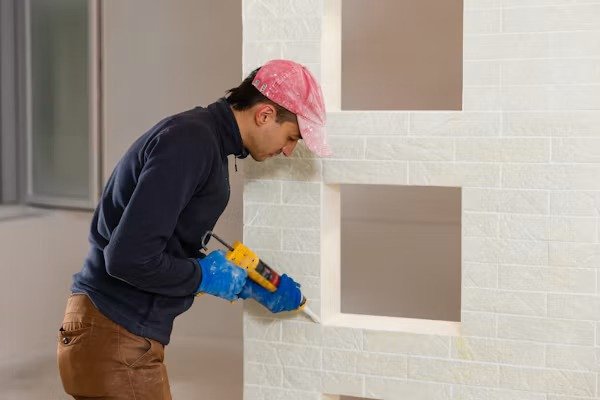
The Preparation Not Photographed
A lot of things are done by a caulking specialist before applying the sealant material. Even though the joint looks impeccable right after its installation, it will peel off soon if the preparation was done badly.
- The old sealant material, dust, oil and moisture must be removed or dealt with so that the new one sticks to the surface properly.
- The backing rod regulates the depth of the joint, giving it some flexibility and preventing tearing.
- The primers increase the adhesion properties for certain surfaces like concrete and masonry, per the manufacturer’s instructions.
Finding the Right Sealant to Match Joint Movement
Silicone, polyurethane and hybrid sealants all behave in different ways when exposed to sunlight, rain and movement, so it’s no surprise that some can be painted while others have better UV resistance, and each product has its own limits on how far it can stretch. The differences between individual products can be pretty significant even within the same category.
An experienced hand will have a look at the manufacturer’s tech data sheet to see what the specific product they’re using can do. That document will tell you what surfaces it’s suitable for, whether you need a primer, how much movement it can handle, what sorts of moisture conditions it can put up with and how long it takes to cure. If you’re hiring a caulking specialist, ask them to point out the product they plan to use and explain why it’s been chosen.
Every project is different. Some joints just need to stop air getting in, others have to keep water out, withstand the weather or allow for the expansion and contraction of a surface. Precast panels, cladding, windows, doors, driveways and car parks all experience different sorts of movement and environmental conditions.
Working at Height Makes the Job a Lot Tougher
A lot of commercial building joints are stuck way up high. Stats from Safe Work Australia show that the construction industry lost 41 workers in 2025, almost one-fifth of all national fatalities. These are industry-wide numbers, not just for caulking, but they show why access needs careful consideration.
A worker trying to reach from a dodgy ladder is probably not going to produce the same finish as one standing on a solid platform. Scaffolding, swing stages and rope access all offer different benefits in terms of speed, reach and stability. Figuring out the right method is just part of planning the job, and safe working conditions make it a heck of a lot easier to get the sealant applied right.
Checking a Finished Joint for Quality
You don’t need to be an expert to check the quality of a completed sealant joint:
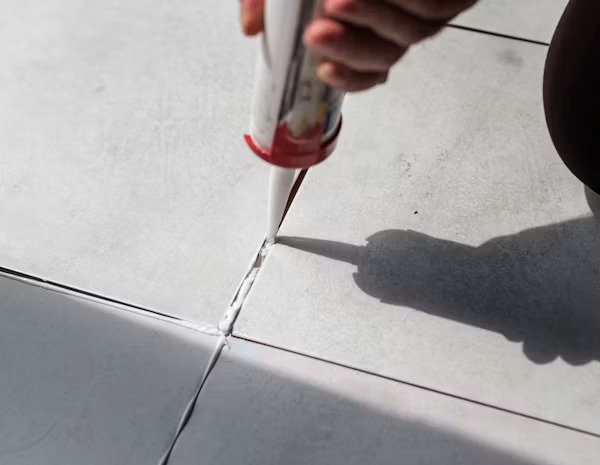
- Make sure the joint is the same width all the way along, without any pinholes or bubbles and no areas where the sealant is too thin.
- The finished surface should be smooth and the sealant should be firmly stuck to both sides of the joint.
- Leave the sealant alone to cure before painting or touching it; disturbing it too early can ruin the finish.
For bigger projects, taking dated photos and getting records of approval at each stage can protect both the contractor and the property owner, and make it a lot easier to track down a problem if one develops later.
Where Caulking Meets Other Trades
Caulking work often overlaps with waterproofing, concrete repairs, cladding and window installation. Problems can arise when one contractor assumes another trade has already done the necessary work. Having a clear scope of work in place helps prevent these gaps in responsibility. Experienced specialists will ask about related work before quoting a job and make sure to explain exactly what their service covers. Property owners can get an idea of a contractor’s experience by asking who will be in charge of the joint where two different trades meet; the answer might tell you more about their approach than any list of previous projects.






Leave a comment